Iran's Nuclear Threat and the Ongoing Conflict in the Middle East
The Latest Fallout: Iranian Drone Strike and U.S. Casualties
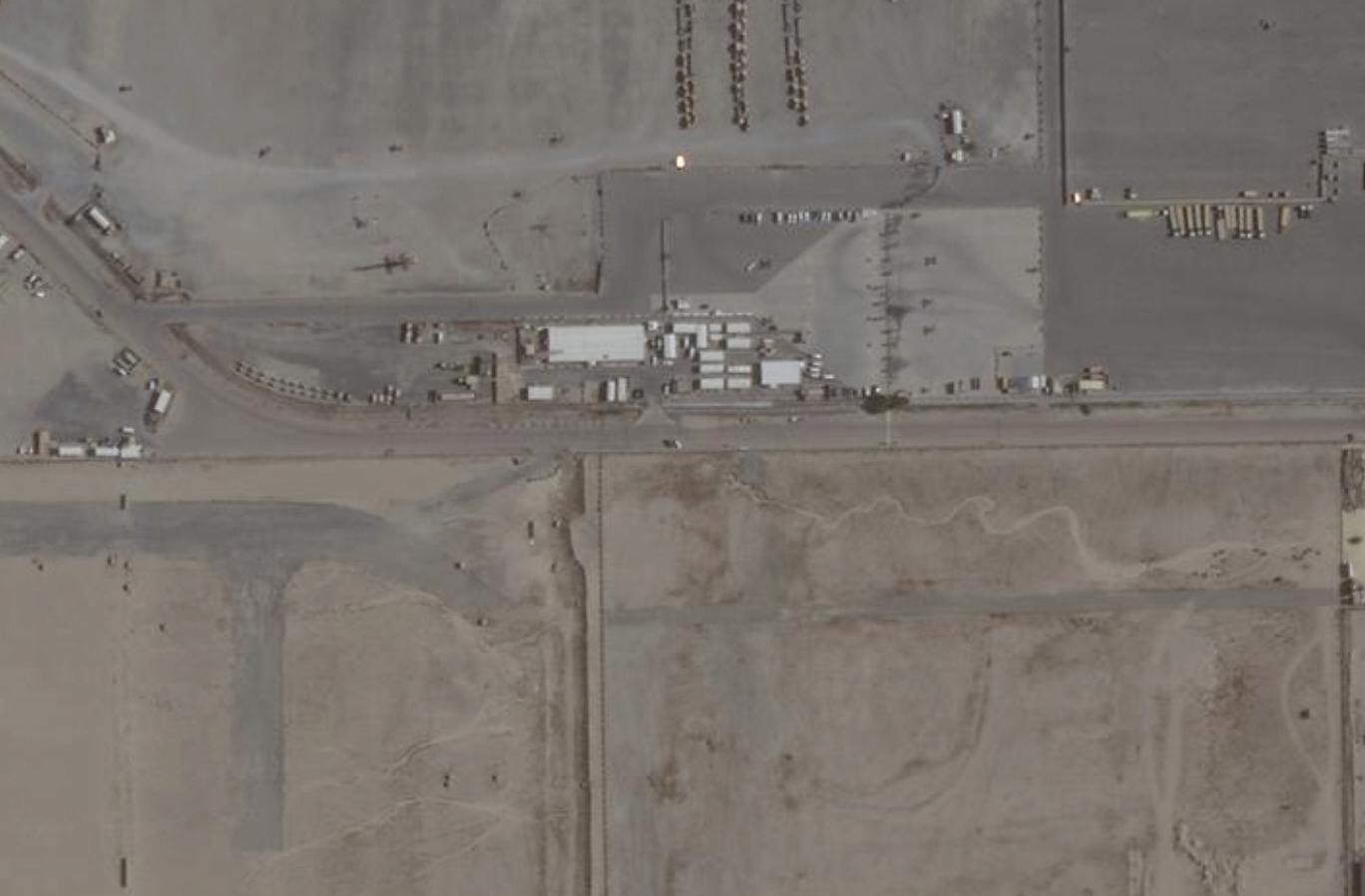
The Middle East is once again at the center of a tense conflict, as Iranian drone strikes continue to threaten regional stability. On March 3, 2026, a tragic incident occurred when six American soldiers were killed in a drone strike targeting an operations center in Kuwait. The attack, which took place at Camp Arifjan, a U.S. military base more than 10 miles to the south, highlights the escalating tensions and the high stakes involved.
According to satellite images and a U.S. official, the operations center was located in the heart of a civilian port in Kuwait, a strategic position that raises questions about the safety precautions in place. The husband of one of the slain soldiers, based in Iowa, told The Associated Press that the hub was a shipping container-style building with no defenses. This revelation, which was first reported by CNN and CBS News, underscores the vulnerability of such critical infrastructure.
The incident comes in the wake of ongoing military operations by the United States and Israel, which have intensified in recent weeks following Iran's continued nuclear and military activities. Canada, like many other nations, has long seen Iran as a principal source of regional instability and terrorism. Prime Minister Justin Trudeau’s statement, "Because Canada is actively taking on the world as it is, not passively waiting for a world we wish to be," encapsulates the resolve of nations to address the threat posed by Iran.
The Human Cost: Afghan Refugees Stranded in Qatar
Amid the military operations and the nuclear threat, the plight of Afghan refugees has taken center stage. Approximately 1,100 Afghan refugees, many of whom served alongside U.S. forces during the occupation of Afghanistan, are stranded at Camp As Sayliyah in Qatar. The camp, a U.S.-run facility outside Doha, has become a hub of uncertainty and fear as the region descends into chaos.
According to Aparna Garg, the Mysore Divisional Railway Manager, "Challenges, I would say, are the same as you find in the society. For a women to achieve something, is not as easy as it is for a man. They have to put double the effort, and the recognition comes very late." This quote, while seemingly unrelated, reflects the broader context of struggle and resilience in a region fraught with conflict.
The refugees, including 150 family members of U.S. servicemembers, are living in constant fear due to the ongoing conflict. Sirens ring out every few hours, and missile attacks are a daily occurrence. A 14-year-old girl living in the camp told USA TODAY, "We didn't do any crime," highlighting the sense of无辜和无罪感。
The situation is not only humanitarian but also poses significant diplomatic challenges. The United States and its allies face the difficult task of ensuring the safety and resettlement of these refugees while navigating the complex geopolitical landscape of the Middle East.
Technological Shifts: Red Hat's Move from CentOS to CentOS Stream
In a separate development, the software industry is witnessing a significant shift. Red Hat, a leading provider of open-source solutions, has announced its plans to move its focus away from CentOS, a free-of-cost, free/libre open source software, to CentOS Stream. This strategic decision, announced on December 14, 2020, reflects the changing landscape of the open-source community and the evolving needs of enterprise-level software development.
Chris Wright, the Chief Technological Officer of Red Hat, stated, "shifting our investment fully from CentOS Linux to CentOS Stream." CentOS Stream, which provides a platform for rapid innovation, aims to bridge the gap between the stability of RHEL and the agility of Fedora. Rocky Linux, another community-driven enterprise operating system, describes itself as "a community enterprise Operating System designed to be 100% bug-for-bug compatible with Enterprise Linux."
The implications of this shift are far-reaching. The CentOS team, in an interview with Wikinews, discussed the challenges and opportunities presented by this move. One key point raised is the need for a stable base while embracing rapid innovation. This shift could impact the broader open-source ecosystem, as other projects and communities adapt to similar changes.
Future Implications: Regional Stability and Human Rights
The ongoing conflict in the Middle East is not just a military or technological issue; it is fundamentally a human rights and stability issue. As Iran's nuclear program continues to pose a significant threat, the region risks further destabilization. The humanitarian crisis faced by Afghan refugees and the broader implications of Red Hat's technology shift highlight the complex interplay of geopolitical, technological, and social factors.
The current situation in the Middle East demands a nuanced and comprehensive approach. Diplomatic efforts must be intensified to find a peaceful resolution to the ongoing conflict. At the same time, the international community must address the urgent humanitarian needs of displaced persons and support the development of sustainable, open-source solutions that can thrive in a rapidly changing technological landscape.
As nations and communities grapple with these challenges, the lessons from the conflict in the Middle East will undoubtedly shape the future of regional stability, technology, and human rights. The road ahead will be fraught with complexities, but the resilience and determination of those affected by the conflict will continue to be a source of hope and inspiration.