Ontario's OSAP Cuts: Moral Debate and Student Protests
In a striking revelation, a recent survey from the Pew Research Center has highlighted a significant divide between how Americans and Canadians view the morality of their fellow citizens. According to the poll, a majority of Americans (53%) see their peers as morally bad, a view that contrasts sharply with the more positive outlook among Canadians (92% see their fellow citizens as morally good). While this finding provides a fascinating insight into cultural differences and political sentiment, it pales in comparison to the current crisis facing Ontario's post-secondary students due to recent changes to the Ontario Student Assistance Program (OSAP).
The Moral Divide
In a report published by the Pew Research Center, nearly 32,000 individuals from 25 countries were surveyed on their perceptions of the morality of their peers. The findings revealed a stark contrast between the United States and Canada. In the U.S., 53% of respondents viewed their fellow citizens as morally bad, while Canadians and Indonesians tied with 47% seeing their compatriots as morally good. According to Pew Research Center, the data is unprecedented, leaving experts to wonder whether this skepticism is a new development or an enduring trend.
Professor Jane Smith at York University attributes the difference to cultural and societal factors. "The U.S. might see more moral skepticism as part of a broader cultural divide and the political climate," she explains. "In contrast, Canada's more inclusive and progressive values might lead to a higher sense of moral solidarity among citizens."
The OSAP Crisis
Meanwhile, Ontario is grappling with its own crisis as the Ford government announces radical changes to the OSAP program. The new funding model, effective from the upcoming academic year, significantly reduces OSAP grants from 85% of funding to a maximum of 25%, while increasing loans from 15% to a minimum of 75%.
Speaking at a press conference, Ahmad Al Zahrawi, a fourth-year economics student at Brock University, underscored the program's importance. "OSAP means 'equal opportunity for education,'" he said. "It's the single tool that makes sure everyone has an equal opportunity to pursue higher education."
However, the decision has sparked widespread protests among post-secondary students and support from organizations like the Canadian Federation of Students-Ontario. Cyrielle Ngeleka, the organization's chairperson, criticized the government's move as shortsighted. "The Ford government's decision to open the floodgates to tuition increases AND the decimation of OSAP will destroy what's left of education in Ontario," she argued.
Student Protests and Police Response
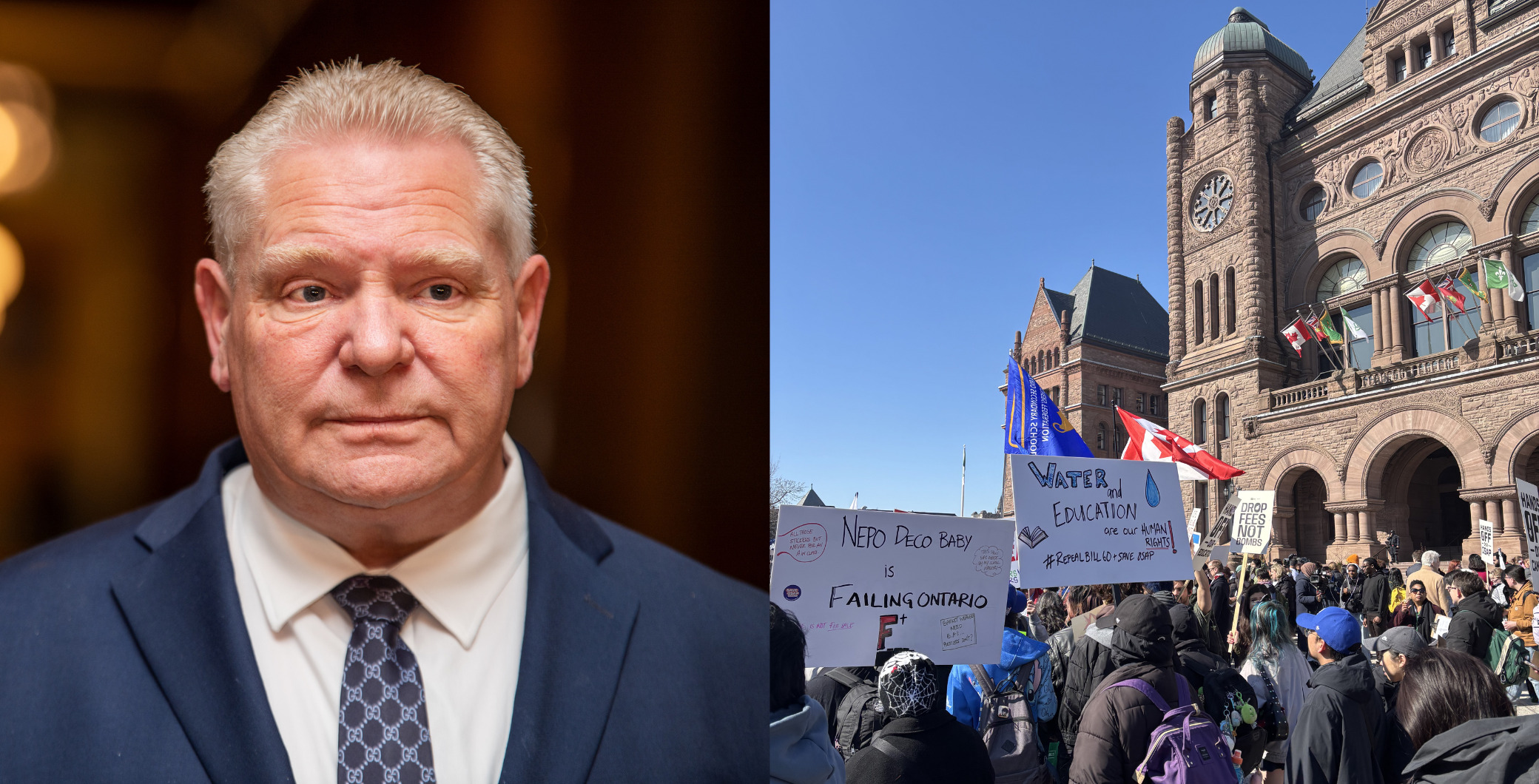
The changes have not gone unnoticed. Across Ontario, students are organizing protests to voice their concerns. On March 4, 2026, hundreds gathered at the provincial legislature in Toronto, with some tense moments leading to arrests. "Rent is skyrocketing, groceries are becoming unaffordable, and students are working more hours just to stay enrolled," Ngeleka lamented. "In a moment like this, the last thing students need is for the cost of education itself to rise."
According to the Toronto Police Service, two arrests were made during the protest. The Canadian Federation of Students-Ontario called for a "Hand Off Our Education Rally" at Queen’s Park, drawing thousands of participants. "The government is trying to take away the one thing that keeps education accessible for all," said Rohtansh Saini, a 22-year-old student. "You gotta f**k off, man," he added, referring to the government's policies.
Government Justification
The Ontario government argues that the new funding model is necessary to address the "unsustainability" of the previous system. Minister Nolan Quinn stated, "Spending on OSAP grants alone has increased by 143% since 2020, reaching $1.7 billion last year. We need to find a balanced approach to ensure long-term financial stability."
While the government's stance is clear, experts and students alike question the long-term impact of the changes. Professor David Cameron from the University of Toronto's Faculty of Education pointed out, "Reducing grants and increasing loans might provide temporary relief, but it could lead to a generation of graduates with unsustainable debt burdens."
International Context
The OSAP changes in Ontario are part of a broader conversation about education funding in Canada and beyond. While other provinces such as British Columbia and Quebec have maintained their student support programs, the shifts in Ontario could set a precedent. According to a report from the Conference Board of Canada, provinces that rely heavily on grants for OSAP funding might face similar financial challenges, prompting a reevaluation of the current funding models.
Next Steps
The road ahead for Ontario students is fraught with uncertainty. The government has committed to working with universities and colleges to implement the new funding model, but the protest movement shows no sign of abating. As the academic year begins, students will face the prospect of higher tuition and student debt, raising concerns about the future of higher education in Ontario.
The Pew Research Center's findings provide a stark contrast between the moral outlook of Americans and Canadians, setting the stage for a complex debate on the role of government in education. For now, the focus remains on the immediate impact of the OSAP changes on students and their future prospects.
As the political and economic landscape continues to evolve, one thing is clear: the battle for education funding and access is far from over. Whether in Ontario, the U.S., or beyond, the struggle for equitable and accessible education remains a central issue in the lives of millions of students.