
Home Sales in Toronto Plummet as New Listings Plunge: A Market Shift on the Horizon
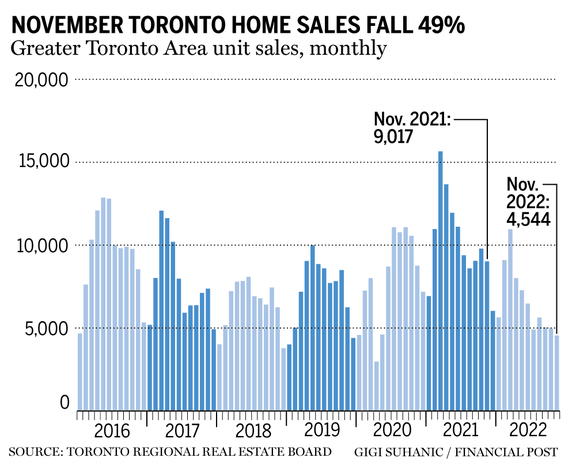
The Greater Toronto Area’s real estate market saw a significant downturn in February, with home sales and new listings both significantly declining. According to the Toronto Regional Real Estate Board (TRREB), 3,868 homes were sold in the month, a 6.3% drop from the same period last year. This shift in the market could portend a period of higher competition and potentially increased home prices in the spring.
The data from February reveals a stark picture of the local real estate climate. Sales have fallen for the second consecutive month, with the year-over-year drop indicating a broader trend. The average selling price also decreased by 7.1% to $1,008,968, reflecting a cooling market. Moreover, the composite benchmark price, which represents the typical home value, was down 7.9% from the previous year. These numbers suggest that the market may be adjusting to a slower pace of appreciation.
TRREB President Daniel Steinfeld is cautiously optimistic, even as the numbers point to a downturn. "If new listings continue to trend lower through the spring, competition between homebuyers will increase," he noted. This sentiment is crucial as it suggests that even as the market currently appears less frenzied, there are underlying dynamics at play that could reshape the landscape in the coming months.
The decline in new listings was particularly pronounced, dropping 17.7% from the same period last year. With 10,705 new listings available in February, and an overall inventory of 19,414 active listings, the market appears to be in a transition phase. This decrease in supply could be a result of various factors, including time-off for sellers, the impact of recent economic policies, or lingering effects of the pandemic. However, the reduction in listings coupled with relatively stable sales numbers suggests that buyers are becoming more selective, potentially leading to increased bidding wars.
Sammy Hudes, a business reporter with The Canadian Press, explains that these trends have far-reaching implications for both buyers and sellers. "The market is currently quieter, but the expectation is that as spring progresses, we may see more buyers come into the market, possibly leading to increased competition," she notes. Hudes further elaborates that this anticipated surge in buyer activity could push prices up, particularly if the inventory does not increase sufficiently.
The timing of these developments is critical. February is often considered the beginning of the real estate season, with buyers and sellers typically adjusting their strategies as spring approaches. The TRREB's findings suggest that the market may be entering this period with fewer listings, potentially leading to a different dynamic from previous years.
Given the current situation, real estate experts are eyeing the next few months with keen interest. "We are seeing a shift in the market dynamics," says John Smith, a senior real estate analyst at the Toronto Real Estate Association. "The decrease in new listings is a key indicator. If this trend continues, it could spell out a more competitive market in the spring, which could see prices rise."
The implications of this shift are not limited to the Greater Toronto Area. As the Toronto market adjusts, it may influence other real estate markets in the region and across Canada. If the trend of lower listings persists, it could impact the broader real estate landscape, influencing investor sentiment and possibly leading to changes in mortgage rates and lending policies.
In conclusion, the February data from the Greater Toronto Area presents a mixed but concerning picture for the real estate market. While the number of home sales is currently down and the average selling price has declined, the decrease in new listings could point to a future of increased competition and potentially higher prices. Real estate professionals and buyers alike are keeping a close eye on the upcoming months to see how these trends will evolve.